Cybersecurity News Weekly Newsletter – Windows, Chrome, and Apple 0-days, Kali Linux 2025.4, and MITRE Top 25
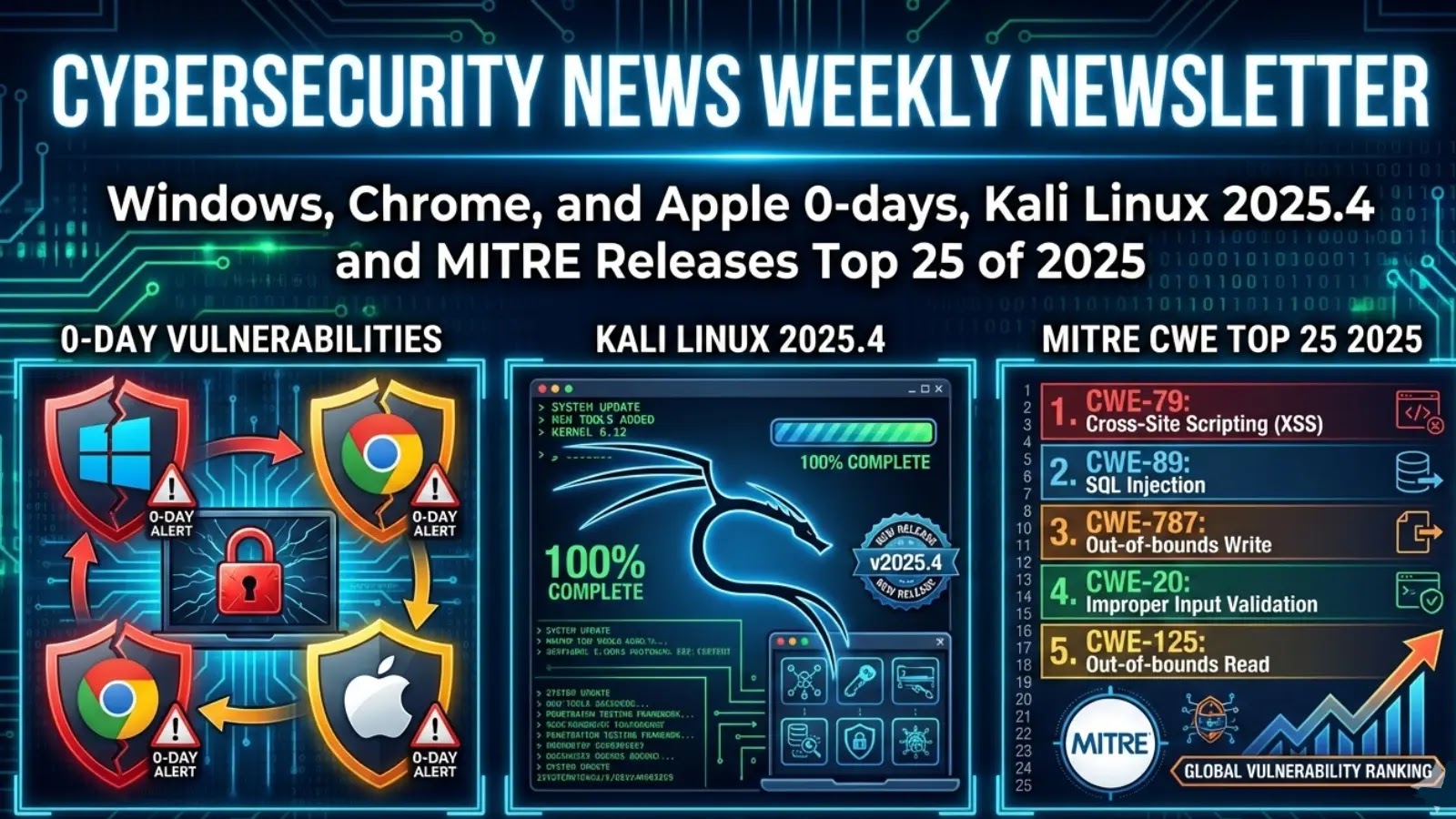
As 2025 nears its close, the cybersecurity landscape shows no signs of slowing down. This week’s developments highlight how rapidly the threat environment continues to evolve with major zero-day vulnerabilities targeting Windows, Chrome, and Apple devices, each actively exploited in the wild. These high-risk flaws underline the continued importance of swift patching, layered defense, and continuous threat monitoring across enterprise ecosystems. Meanwhile, offensive security professionals received a major update as Kali Linux 2025.4 rolled out with new tools, kernel upgrades, and enhanced cloud integration, reinforcing its position as a cornerstone for penetration testing and digital forensics in both research and operational security settings. On the defensive front, MITRE released its annual Top 25 Most Dangerous Software Weaknesses of 2025, spotlighting recurring coding errors that adversaries frequently weaponize. From inadequate input validation to risky resource management, the list serves as a vital reminder that secure coding is still the first line of defense against complex exploitation techniques and chained attack vectors. Across the board, this week reflects a convergence of aggressive exploitation activity and heightened community response. Organizations are urged to prioritize visibility, validate software supply chains, and stay aligned with evolving security frameworks. Whether patching systems affected by 0-days, assessing exposure through MITRE’s latest findings, or adopting the latest features of Kali Linux, the takeaway is clear — cyber resilience depends on agility, awareness, and readiness. Stay ahead of the threat curve with this week’s highlights, advisories, and actionable updates across infrastructure, endpoint, and application security domains.